

A Beacon of Liberty
Isolationism and the Strategic Dilemma
Strategic and selective engagement, where the US chooses battles that protect its sovereignty, economic prosperity, and geographic security without being entangled in endless ideological wars.
Gain Access – Be Informed!
sent directly to your inbox
Still not an SFP Member?
Exclusive Content • Unlimited Special Report Downloads • Join the Discussion!
100% FREE • We'll never sell or share your personal information!


Breaking News

More Health Workers Strike At Ebola Centers
As the world’s fastest Ebola outbreak spreads, more health care workers strike at facilities in the Democratic Republic of Congo. The current Ebola outbreak in eastern Congo is still spreading, and new challenges are emerging even as work begins on a study of two badly needed treatments for a type of Ebola that currently has none.

America’s Gerontocracy Goes Deeper than Aging Politicians
Senator Lindsey Graham died seemingly out of the blue over the weekend after a tear in his aorta. He was 71 years old.
The news was shocking, in part because Graham was a very active senator—he was just returning from a trip to Ukraine—and because he was seemingly at the height of his power, having built one of the most influential relationships with President Donald Trump of any politician.
But another reason the news was such a surprise was because, compared to many of his colleagues in Washington, Senator Graham was on the younger side.
That impression was fueled by the ongoing ordeal of Senator Mitch McConnell. The 84-year-old serving senator was reportedly found unconscious weeks ago after a fall, leading to his ongoing hospitalization.
Early reports that EMS had responded to a cardiac arrest at McConnell’s residence when he was first hospitalized, his wife’s strange trip to China in the middle of all this, and the total radio silence for weeks from a supposedly active senator all led to speculation online that McConnell was faring far worse than his staff and Republican party insiders were admitting.
Others went as far as to speculate that McConnell had already passed away, but that his team and establishment allies were attempting to delay the public acknowledgment of his death until after it would no longer force a special election. That theory gained enough traction online to prompt McConnell’s team to post a literal proof-of-life photo of the senator holding that day’s newspaper.
This all follows, of course, the age-record-breaking presidency of Joe Biden, and the campaign that was derailed because of it. Now, Trump is on track to break Biden’s record and, at the end of his term, become the oldest serving US president in history.
In addition to McConnell, many of the most prominent members of Congress are quite elderly, have been in office for decades, and show no interest in ever retiring. Senator Dianne Feinstein—who died of old age in 2023 at the age of 90, hours after casting a vote on the Senate floor—provides a good example of how many of these career politicians apparently plan to leave office.
With all this happening, it’s easy to understand why many have increasingly come to consider the United States to be a gerontocracy, or a society ruled by old people.
As with just about anything online, there are sophisticated and unsophisticated versions of this observation.
The unsophisticated version simply points to the multitude of examples of politicians remaining in office long after most people would have retired from just about any line of work and concludes that the prevalence of exceptionally elderly politicians is hampering the government’s ability to function properly.
This narrative is based on a fundamental misunderstanding of the actual role of politicians within the American political system.
While American politicians certainly have power, in the last century or so—and especially in the decades since WWII—the bulk of federal power has shifted from politicians in Congress and state legislatures to the bureaucracies that make up the ballooning federal agencies in the executive branch.
The vast majority of those in Congress are simply expected to show up and vote with their party’s leadership on the latest massive omnibus spending bills, made up almost entirely of carve-outs to special interests. Or to pass legislation crafted with diligent collaboration from “experts” at the executive agencies that will receive the new funding.
The most effective politicians will lobby to add additional spending that in some way benefits some special interest in their own district. But mostly, their modern role is to fundraise for their party, engage in legitimizing rituals, and stoke vicious debates with the other party over what are, in the scheme of things, incredibly minor policy issues to keep us all believing that we truly live in a functioning representational democracy. And, especially because the politicians themselves are merely the frontmen for a larger staff handling the specifics on all those fronts, it’s a role that quite elderly people are certainly capable of doing well into the physical and mental decline that often accompanies one’s later years.
The more sophisticated version of the “America is a gerontocracy” narrative focuses less on the politicians themselves and more on what the government is doing. Because, if one takes even a passing glance at how the federal government taxes and spends, it quickly becomes clear that government programs are actively transferring vast amounts of wealth from younger generations to older generations who are, on average, much wealthier.
There are a lot of reasons for this. Many can be traced back to seemingly innocuous attempts to ensure that elderly people without close family members, adequate housing, or connections to any kind of community were cared for. The programs that would eventually become Social Security and Medicare were sold as small programs to help those on the margin. The same goes for the founding of interest groups and lobbies such as AARP (formerly the American Association of Retired Persons).
But as with just about any government program started in the name of helping a small number of genuinely downtrodden Americans, these entitlement programs exploded in size as they were quickly expanded to also benefit whichever groups were organized and motivated enough to lobby effectively.
And even setting lobbying aside, the elderly tend to be disproportionately dependable, and therefore powerful, as a voting bloc. Retirees especially often have more time to focus on issues, call lawmakers, watch cable news, write letters to the editor, engage with local parties and candidates, and vote than their younger working counterparts.
So promising to protect—or better yet, expand—entitlement programs that seniors benefit from is a straightforward way for any politician to secure the support of a lot of enthusiastic voters, while even muttering a half-formed thought about potentially cutting them is almost certain to torpedo any campaign.
Meaning the conditions for the substantial growth of programs transferring money to seniors were already there. But, on top of that, the baby boomer generation—now making up most retirees—has grown old at the same time that medical technology advanced substantially. So, on top of being an unusually large generation, they are also living longer. That’s, of course, a positive development. But in our increasingly socialized elder-care system that also puts a growing financial burden on younger generations.
Contrary to what the government’s shockingly-effective propaganda says, the money seniors receive through Social Security is not their own money that had been taken from their previous paychecks and set aside to be returned to them in retirement. The money they “paid in” to the program had already been used for Social Security checks for earlier generations and other government programs. The money today’s seniors are getting through the program is being taxed directly from today’s younger workers—workers who are forced to pay for a much larger pool of Social Security recipients than the previous generations were.
Add to that the other programs like Medicare that don’t even pretend to come from a “lockbox.” Or the fact that some of these programs cover things like golf fees and ski trips. Or the various government programs explicitly helping seniors stay in full family-sized homes long after downsizing would make more financial sense while simultaneously pushing the price of those homes higher and higher. And the disproportionate burden younger generations experience from the Fed’s permanent price inflation—especially the price inflation that came as a result of the trillions of dollars printed to prop things up as the federal government shut down the economy, the schools, and every aspect of life for younger generations to keep the elderly safe from a disease everyone was always going to get anyway. And, above all, the fact that much of this wealth is being transferred into the pockets of older Americans who are much wealthier than the younger people that are forced to pay for it.
Lay all that out, and it’s easy to see why we are experiencing so much generational strife right now. How could there not be?
The justified frustration younger generations are experiencing with the current setup often gets directed towards the handful of exceptionally old politicians and justices at the top of all three branches of the government. But the true root of this problem lies in the intergenerational wealth-transferring government programs that have been built up over many decades. And that will, if not properly understood and subsequently abolished, continue to fuel this generational conflict long after the current group of geriatric politicians is gone.

More Health Workers Strike At Ebola Centers
As the world’s fastest Ebola outbreak spreads, more health care workers strike at facilities in the Democratic Republic of Congo. The current Ebola outbreak in eastern Congo is still spreading, and new challenges are emerging even as work begins on a study of two badly needed treatments for a type of Ebola that currently has none.

US Calls For Stronger Military Presence On Greenland
The United States has circled back to Greenland as the ruling class indicts former Cuban ruler as what many assume is a pretext for invasion. Is the US doing the same thing to Greenland as it is attempting with Cuba and successfully performed in Venezuela?

Ebola Outbreak Worsens In DRC
The most recent Ebola outbreak in the Democratic Republic of Congo (DRC or DR Congo) is worsening. The World Health Organization (WHO) director, Tedros Adhanom Ghebreyesus, is concerned that population movement is going to exacerbate the already tense situation.

Pretext For Kidnapping? US Indicts Former Cuban Ruler
The United States Justice Department has indicted Raúl Castro, the former ruler of Cuba. Similarly, this move mirrors the one made by the US that offered a pretext for the kidnapping of Venezuela’s ruler, Nicolas Maduro.
We Are Being Conditioned For A “Big Reveal” About UFOs And Aliens
It isn’t just a coincidence that there has been an explosion in interest in the subject of UFOs and aliens recently. The truth is that we are being conditioned. For decades, books, movies, television shows, and video games have been conditioning us to think a certain way about encounters with very strange unidentified aircraft that are flying through our skies and encounters with very strange unidentified beings that seem to have unusual powers. But now this year, it appears that the level of conditioning is reaching a crescendo. We are being told to brace ourselves for some sort of “big reveal” that will change everything, and that should deeply alarm all of us.

Iran Warns Will Take The War “Beyond The Region” If Trump Restarts Attacks
Ali Vaez, director of the Iran Project at the International Crisis Group, has summed up where things stand: “Since the ceasefire came into effect, both Washington and Tehran appear to be operating under the illusion that time is on their side,” he said. “Each seems to believe that the blockade and counter-blockade in the Strait of Hormuz impose greater costs on the other, while offering a breathing space to regroup for a possible resumption of hostilities,” Vaez told Al Jazeera.

The Ebola Outbreak is More Concerning Than The Hantavirus
While the risk of Ebola and hantavirus to Americans is low, the World Health Organization, along with other experts, says that both are still a concern. However, health officials state that the Ebola outbreak is a far more serious epidemic than the hanatavirus.

Ebola Outbreak’s “Scale And Speed” Worry WHO, As Deaths Rise Sharply
The current Ebola outbreak is worrying the World Health Organization’s chief as the “scale and speed” of the virus’s spread increases. The number of deaths has also risen sharply as reports of illness roll in.

US-Nigeria Joint Operation Kills 175 Islamic Militants
The United States and Nigeria conducted a joint operation in which 175 members of the Islamic State West Africa Province (ISWAP) were killed. These fighters were said to be both simple militants and senior commanders.

Oil Plummets As NATO Mulls Hormuz Deployment If Strait Not Open By July
In a huge and unexpected announcement, amid stalled US-Iran peace talks, which have proven a failure and elusive thus far, NATO now says it could deploy military assets to forcibly reopen the Strait of Hormuz. Per breaking newswires Tuesday late morning:

Causes of Uncontrollable US Public Spending and Debt
Annual US public spending has been in deficit for decades. As a result, total US debt continues to increase year after year with no end in sight. The end may not be in sight but the debt cannot continue to grow forever. We just don’t know when markets will shed the dollar, although the process may already be underway. In this brief essay, I will not point out all the disastrous consequences except that they are disastrous and will happen. Rather, I will point out how we got to this sorry state of affairs when it appears that other nations, such as China and Russia, have done a much better job of controlling public spending.

The Ebola Scare Begins: The Worst Outbreak Of Bundibugyo Virus Disease In World History
Global health authorities are extremely concerned about an outbreak of Bundibugyo virus disease in the Democratic Republic of the Congo. The death toll has already reached triple digits, and new cases have been detected hundreds of miles away from the original outbreak. BVD is a type of Ebola disease, but unlike other types of Ebola, there is no effective treatment, and there is no cure.
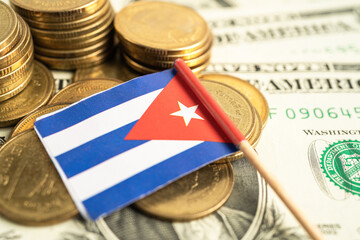
US Is Inventing a Case For Economic WAR Against Cuba
Cuban Foreign Minister Bruno Rodriguez Parrilla has accused the United States of inventing an excuse to start an economic war with Havana. Rodriguez Parrilla has said that an Axios report claiming that the island had acquired attack drones from Russia and Iran is nothing more than a pretext for a potential invasion of the island nation.
WHO Declares A Global Ebola “Emergency”
The World Health Organization has declared a “global health emergency” after an Ebola outbreak surfaced in the Democratic Republic of Congo (DRC). So far, there are at least eight confirmed cases, 246 suspected infections, and 80 suspected deaths reported in DRC, along with two additional cases in Uganda.

Trump Puts Off A “Very Major Attack” On Iran
United States President Donald Trump has chosen to delay a “very major attack” on Iran. The US ruler has instructed the Department of War to hold off on strikes for a few days to give Tehran a chance to accept the deal sent by Washington.

Oil Slides After Iran Says US Agreed To Lift Oil Sanctions During Talks
A flurry of (the somewhat typically-timed) Monday opener headlines has pushed oil prices lower, erasing weekend gains, including Al Arabia reporting that Iran is ready to accept a long-term nuclear freeze.

The Lines We Thought Machines Wouldn’t Cross
In 2000, the world braced for Y2K. It came with a date and a remedy. There was panic about doomsday, but as other programmers and I stretched the year field from two to four characters, apart from scattered hiccups, the lights stayed on. Everything about Y2K was known—the problem, the solution, and the deadline.

Canada Confirms A “Presumptive Positive” Test For Hantavirus
Canada has confirmed its first hantavirus infection after a cruise ship passenger tested positive for the virus. The infected person was on board the MV Hondius, the cruise ship where the initial outbreak occurred.

Iran Warns The US: Gulf Of Oman Could Become A “Graveyard”
Iran has warned the United States that the Gulf of Oman could become a “graveyard” for America’s fleets. Warships will be meeting their watery end as negotiations remain gridlocked.
Trump To Iran: The Clock is Ticking
United States President Donald Trump has warned Iran that the clock is ticking. He added that “there won’t be anything left” of Iran if the country fails to make a deal with the US ruling class.

Inflation Hits HIGHEST Level In Three Years Amid Ongoing War On Iran
Inflation hit a three-year high in April, with consumer prices rising 3.8% over the past year and 0.6% in April, according to BLS data.