
This article was originally published by Cassie B. at Natural News.
-
- Cuba’s power grid collapsed again, causing widespread blackouts.
-
- The crisis stems from fuel shortages and an outdated, centralized system.
-
- Daily life is severely disrupted, with residents struggling for basic necessities.
-
- The U.S. grid faces similar vulnerabilities from aging infrastructure and foreign dependencies.
-
- America must act now to harden its grid and prevent a comparable catastrophe.
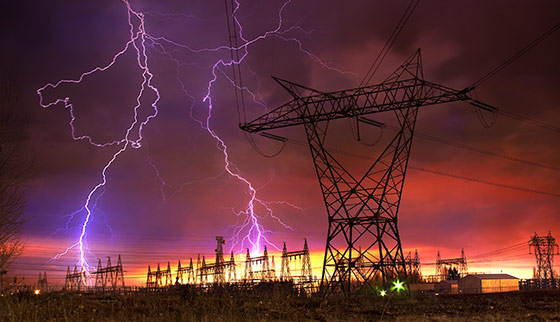
The lights went out again in Havana this week, plunging millions into darkness and offering a real-time preview of a future no American should ever have to face. On Wednesday, a partial collapse of Cuba’s national electrical grid left the capital and western provinces without power, marking the fifth such nationwide failure this year alone. This isn’t just a story about a communist island’s struggles; it is a flashing red siren for the United States, highlighting the catastrophic consequences of neglecting critical infrastructure and becoming dependent on hostile or unstable foreign regimes for energy.
A system on the brink
The immediate cause was a failure on a main transmission line, but the roots of the crisis run deep. Cuba’s power generation is overwhelmingly dependent on oil products, accounting for more than 80% of its electricity. For years, it has relied on fuel imports from allies like Venezuela, Russia, and Mexico. Those imports have now slumped due to production issues and U.S. sanctions, creating a crippling shortage. The result is an outdated grid of obsolete, oil-fired power plants that can now only supply between 50% and 70% of the country’s electricity demand, causing almost daily blackouts.
Life under these conditions is a grinding hardship. As reported by the AP, Havana resident Raúl Calderón, 82, grumbled during the outage, “There’s no connection. No one knows why the power is out. … They’re not saying anything; it’s all silence.” Small business owner Liubel Quintana told the AP, “Things are bad. The power plants are breaking down a lot. I have two children, and food is hard to come by. It’s very tough everywhere you look.” Residents have been forced to invest in charcoal stoves, batteries, and fans to survive soaring temperatures during outages, items many can barely afford.
A warning we cannot ignore
Although Cuba’s situation is exacerbated by a unique set of geopolitical and economic pressures, the core vulnerability is universal: an aging, centralized grid pushed beyond its limits. The U.S. is not immune. Our own grid is aging, heavily reliant on complex supply chains, and vulnerable to a host of threats. As noted in discussions on grid security, high-voltage transformers are largely manufactured overseas, with hundreds of Chinese-made transformers already operating in the U.S. grid, including some that supply power to military installations. The U.S. has limited domestic manufacturing capacity for these critical components.
The parallel to our own potential crisis is clear. The situation in Cuba shows what happens when a grid is perpetually starved of fuel and maintenance: it collapses, repeatedly. The U.S. grid faces different but equally severe risks, from geomagnetic storms to cyber-attacks. A study cited by security analysts notes a 12% chance per decade of a major solar storm capable of taking down the U.S. power grid, an annual risk we blindly accept.
Cuba is now desperately looking to solar power and deals with China to escape its oil dependency. This scramble for solutions after the fact is a lesson in what not to do. The time for America to act is now, before a crisis forces our hand. We must harden our infrastructure, secure our supply chains for critical components like transformers, and invest in decentralized, resilient energy sources. The goal must be to push the risk of a nationwide blackout down by several orders of magnitude.
Watching Havana’s skyline go dark is not just a news story from a foreign country; it is a live demonstration of societal fragility. When the power is gone, everything that seems automatic fails: computers, refrigeration, air conditioning, plumbing, and sewage. As one observer of infrastructure risk put it, “People often underestimate the value of electricity until they lose it.” Cuba is living that nightmare today. The question for America is whether we will learn from their suffering or condemn ourselves to repeat it on a scale we can scarcely imagine. The darkness in Havana is a reflection we must heed before our own lights flicker and fail.





0 Comments