
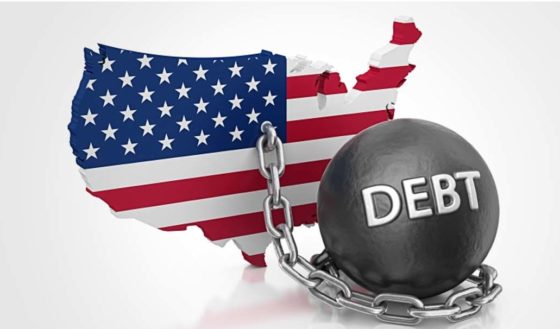
In 2008, when the United States was flung into recession, the culprit was the sub-prime mortgages. People without the ability to repay the money, borrowed to buy houses only to lose it all once the bubble burst. Now, the corporate debt crisis is poised to cause a similar recession.
Although student loans debt has skyrocketed to a disturbing $1.5 trillion, some economists are saying the $1.2 trillion corporate debt could be capable of producing a more disastrous scenario. The borrowers in this current credit bubble aren’t homeowners taking out mortgages. They’re hundreds of United States companies with weaker credit ratings (many of them well-known like Uber and Burger King) who are taking out so-called leveraged loans, according to a report by the Los Angeles Times. These loans are used to fund corporate deals and are of a big concern to financial experts.
“Any fair-minded look at the leveraged loan market should cause significant alarm by anybody concerned about financial stability and the inevitable upcoming economic downturn,” said Dennis Kelleher, president of Better Markets, a group that advocates stricter financial regulation. “You put all these pieces together, it’s a witches brew.”
Former Federal Reserve Chairwoman Janet Yellen also went public this fall with her worries about what she called a “huge deterioration” in the standards for those loans, which make it easier for indebted companies to take on more debt. “If we have a downturn in the economy, there are a lot of firms that will go bankrupt, I think, because of this debt,” she told the Financial Times. “It would probably worsen a downturn.”
But regulations and new laws won’t fix the fact that people and companies and the government itself (who writes and enforces the laws about loans and debt) will not quite borrowing money. The problem is the behavior and reliance on debt in the American culture, not the lack of laws.
“Someone’s going to get hurt there,” Dimon said on a Tuesday earnings call, referring to leveraged loan losses if a recession hits. And some have already suffered because of their massive debts. Toys R Us loaded up on leveraged loan debt when it was purchased in a leveraged buyout in 2005 by private equity firms Bain Capital and KKR & Co. and real estate investment trust Vornado Realty Trust. The debt burden led the toy retailer to file for bankruptcy protection in 2017 after it was unable to refinance the debt.
The debt crisis doesn’t stop at massive credit card debt or student loans. About two-thirds of U.S. companies have enough debt that independent credit raters have them categorized as a higher risk to repay than companies with so-called “investment-grade” ratings, which makes them off-limits to many institutional investors.
https://www.shtfplan.com/headline-news/the-looming-economic-collapse-the-250-trillion-dollar-worldwide-debt-crisis_08152018
There will be a point when this terrifying debt bubble (everything bubble) will burst. It could happen in 6 months or 6 years, but the best way to prepare is to ensure you aren’t a part of it. Pay off as much of your debts if you can to help turn what will be catastrophe into a mild inconvenience.
https://www.shtfplan.com/headline-news/how-to-best-prepare-yourself-for-the-coming-financial-crisis_06282018






0 Comments