
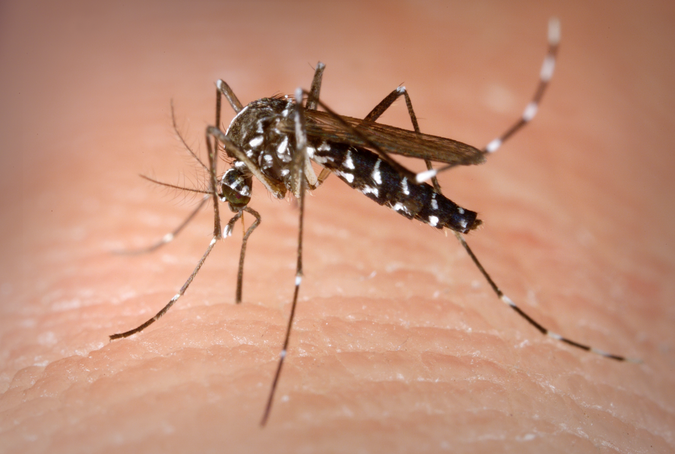
Giant mosquitoes have emerged in North Carolina in the aftermath of Hurricane Florence. The floodwaters that followed the strong hurricane, which made landfall in North Carolina on September 14, have spawned thousands of mega-mosquitoes across the state, according to entomologists.
According to CNN, these new giant mosquitoes have zebra-striped legs and are two to three times as big as the normal bloodsuckers encountered during summer. Michael H. Reiskind, an assistant professor in the Department of Entomology at North Carolina State University said the mosquitoes’ size is noticeable. “Definitely noticeably bigger,” he said. “If you see mosquitoes often, then you’re going to say, ‘Wow, that’s a big mosquito.'”
There is some good news though. This particular species of mosquito, called Psorophora, but commonly known as “gallinippers,” is not likely to sicken any humans. The species is native throughout the eastern United States, all the way up to southern Ontario but pretty harmless as far as spreading diseases go, according to Reiskind. “They can carry dog heartworm, but in general, they don’t actually carry human diseases,” Reiskind reiterated. But he also warned that the bites are quite a bit worse than those of a standard size mosquito.
“In general, they’re pretty rare, I would say, under normal circumstances. But when you get hurricanes, you get such a large boom in the population from the flood that suddenly, everybody notices them,” Reiskind said. “That being said, being bitten by a giant mosquito or being bitten hundreds of times by a giant mosquito can be, in and of itself, a public health issue,” he said. Some people tend to also have more severe reactions to the bites because of the mosquitoes’ size. “It can be truly disturbing. I have an 8-year-old son who reacts really badly to mosquito bites.”
Scientists are now waiting to see what could happen to these mosquitoes if North Carolina get hits by another hurricane, Reiskind said. It could be that all the eggs laid as a result of Hurricane Florence will hatch and the state will have twice the problem it has now, or the eggs may not until after winter, which is not uncommon in a lot of insects. “We really don’t know what will happen,” he said. “This species has not been well-studied in this situation.”
“If Hurricane Michael hits us again really hard, I don’t know what that is going to do.” Hurricane Michael is forecast to bring tropical winds and rain to North Carolina on Thursday. That’s why we need entomologists, he said. “It’s not important till something happens, and then suddenly, it’s like, ‘We need to know this stuff!'”






0 Comments