

A Beacon of Liberty
Isolationism and the Strategic Dilemma
Strategic and selective engagement, where the US chooses battles that protect its sovereignty, economic prosperity, and geographic security without being entangled in endless ideological wars.
Gain Access – Be Informed!
sent directly to your inbox
Still not an SFP Member?
Exclusive Content • Unlimited Special Report Downloads • Join the Discussion!
100% FREE • We'll never sell or share your personal information!


Breaking News

More Health Workers Strike At Ebola Centers
As the world’s fastest Ebola outbreak spreads, more health care workers strike at facilities in the Democratic Republic of Congo. The current Ebola outbreak in eastern Congo is still spreading, and new challenges are emerging even as work begins on a study of two badly needed treatments for a type of Ebola that currently has none.

Ebola Update: Outbreak Continues To Worsen, At Least 930 Have Died
The Bundibugyo strain of the Ebola virus that is currently spreading in the Democratic Republic of Congo is continuing to spread, as health care workers struggle to contain the outbreak. At least 930 people have died, although that number is likely larger and expected to continue to increase.

America’s Gerontocracy Goes Deeper than Aging Politicians
Senator Lindsey Graham died seemingly out of the blue over the weekend after a tear in his aorta. He was 71 years old.
The news was shocking, in part because Graham was a very active senator—he was just returning from a trip to Ukraine—and because he was seemingly at the height of his power, having built one of the most influential relationships with President Donald Trump of any politician.
But another reason the news was such a surprise was because, compared to many of his colleagues in Washington, Senator Graham was on the younger side.
That impression was fueled by the ongoing ordeal of Senator Mitch McConnell. The 84-year-old serving senator was reportedly found unconscious weeks ago after a fall, leading to his ongoing hospitalization.
Early reports that EMS had responded to a cardiac arrest at McConnell’s residence when he was first hospitalized, his wife’s strange trip to China in the middle of all this, and the total radio silence for weeks from a supposedly active senator all led to speculation online that McConnell was faring far worse than his staff and Republican party insiders were admitting.
Others went as far as to speculate that McConnell had already passed away, but that his team and establishment allies were attempting to delay the public acknowledgment of his death until after it would no longer force a special election. That theory gained enough traction online to prompt McConnell’s team to post a literal proof-of-life photo of the senator holding that day’s newspaper.
This all follows, of course, the age-record-breaking presidency of Joe Biden, and the campaign that was derailed because of it. Now, Trump is on track to break Biden’s record and, at the end of his term, become the oldest serving US president in history.
In addition to McConnell, many of the most prominent members of Congress are quite elderly, have been in office for decades, and show no interest in ever retiring. Senator Dianne Feinstein—who died of old age in 2023 at the age of 90, hours after casting a vote on the Senate floor—provides a good example of how many of these career politicians apparently plan to leave office.
With all this happening, it’s easy to understand why many have increasingly come to consider the United States to be a gerontocracy, or a society ruled by old people.
As with just about anything online, there are sophisticated and unsophisticated versions of this observation.
The unsophisticated version simply points to the multitude of examples of politicians remaining in office long after most people would have retired from just about any line of work and concludes that the prevalence of exceptionally elderly politicians is hampering the government’s ability to function properly.
This narrative is based on a fundamental misunderstanding of the actual role of politicians within the American political system.
While American politicians certainly have power, in the last century or so—and especially in the decades since WWII—the bulk of federal power has shifted from politicians in Congress and state legislatures to the bureaucracies that make up the ballooning federal agencies in the executive branch.
The vast majority of those in Congress are simply expected to show up and vote with their party’s leadership on the latest massive omnibus spending bills, made up almost entirely of carve-outs to special interests. Or to pass legislation crafted with diligent collaboration from “experts” at the executive agencies that will receive the new funding.
The most effective politicians will lobby to add additional spending that in some way benefits some special interest in their own district. But mostly, their modern role is to fundraise for their party, engage in legitimizing rituals, and stoke vicious debates with the other party over what are, in the scheme of things, incredibly minor policy issues to keep us all believing that we truly live in a functioning representational democracy. And, especially because the politicians themselves are merely the frontmen for a larger staff handling the specifics on all those fronts, it’s a role that quite elderly people are certainly capable of doing well into the physical and mental decline that often accompanies one’s later years.
The more sophisticated version of the “America is a gerontocracy” narrative focuses less on the politicians themselves and more on what the government is doing. Because, if one takes even a passing glance at how the federal government taxes and spends, it quickly becomes clear that government programs are actively transferring vast amounts of wealth from younger generations to older generations who are, on average, much wealthier.
There are a lot of reasons for this. Many can be traced back to seemingly innocuous attempts to ensure that elderly people without close family members, adequate housing, or connections to any kind of community were cared for. The programs that would eventually become Social Security and Medicare were sold as small programs to help those on the margin. The same goes for the founding of interest groups and lobbies such as AARP (formerly the American Association of Retired Persons).
But as with just about any government program started in the name of helping a small number of genuinely downtrodden Americans, these entitlement programs exploded in size as they were quickly expanded to also benefit whichever groups were organized and motivated enough to lobby effectively.
And even setting lobbying aside, the elderly tend to be disproportionately dependable, and therefore powerful, as a voting bloc. Retirees especially often have more time to focus on issues, call lawmakers, watch cable news, write letters to the editor, engage with local parties and candidates, and vote than their younger working counterparts.
So promising to protect—or better yet, expand—entitlement programs that seniors benefit from is a straightforward way for any politician to secure the support of a lot of enthusiastic voters, while even muttering a half-formed thought about potentially cutting them is almost certain to torpedo any campaign.
Meaning the conditions for the substantial growth of programs transferring money to seniors were already there. But, on top of that, the baby boomer generation—now making up most retirees—has grown old at the same time that medical technology advanced substantially. So, on top of being an unusually large generation, they are also living longer. That’s, of course, a positive development. But in our increasingly socialized elder-care system that also puts a growing financial burden on younger generations.
Contrary to what the government’s shockingly-effective propaganda says, the money seniors receive through Social Security is not their own money that had been taken from their previous paychecks and set aside to be returned to them in retirement. The money they “paid in” to the program had already been used for Social Security checks for earlier generations and other government programs. The money today’s seniors are getting through the program is being taxed directly from today’s younger workers—workers who are forced to pay for a much larger pool of Social Security recipients than the previous generations were.
Add to that the other programs like Medicare that don’t even pretend to come from a “lockbox.” Or the fact that some of these programs cover things like golf fees and ski trips. Or the various government programs explicitly helping seniors stay in full family-sized homes long after downsizing would make more financial sense while simultaneously pushing the price of those homes higher and higher. And the disproportionate burden younger generations experience from the Fed’s permanent price inflation—especially the price inflation that came as a result of the trillions of dollars printed to prop things up as the federal government shut down the economy, the schools, and every aspect of life for younger generations to keep the elderly safe from a disease everyone was always going to get anyway. And, above all, the fact that much of this wealth is being transferred into the pockets of older Americans who are much wealthier than the younger people that are forced to pay for it.
Lay all that out, and it’s easy to see why we are experiencing so much generational strife right now. How could there not be?
The justified frustration younger generations are experiencing with the current setup often gets directed towards the handful of exceptionally old politicians and justices at the top of all three branches of the government. But the true root of this problem lies in the intergenerational wealth-transferring government programs that have been built up over many decades. And that will, if not properly understood and subsequently abolished, continue to fuel this generational conflict long after the current group of geriatric politicians is gone.

More Health Workers Strike At Ebola Centers
As the world’s fastest Ebola outbreak spreads, more health care workers strike at facilities in the Democratic Republic of Congo. The current Ebola outbreak in eastern Congo is still spreading, and new challenges are emerging even as work begins on a study of two badly needed treatments for a type of Ebola that currently has none.
Ebola Update: Outbreak Continues To Worsen, At Least 930 Have Died
The Bundibugyo strain of the Ebola virus that is currently spreading in the Democratic Republic of Congo is continuing to spread, as health care workers struggle to contain the outbreak. At least 930 people have died, although that number is likely larger and expected to continue to increase.

Federal Spending Rises to Post-Covid High in Wake of DOGE Failure
The US Treasury Department last week released its monthly report on federal spending and revenue. March spending for the US federal government was up by more than $20 billion, or by nearly four percent, from March of last year. In spite of the administration’s claims last year that Trump would implement hundreds of billions in spending cuts, the US federal government is now spending at higher levels than anything seen since 2021, when COVID-related spending surged above all previous historical peacetime levels.

US Says ‘No Ships Made It Past Blockade’ As Iran Mulls Hormuz Shipping Pause To Preserve Talks
CENTCOM: “During the first 24 hours, no ships made it past the U.S. blockade & 6 merchant vessels complied with direction from US forces to turn around to re-enter an Iranian port on the Gulf of Oman,” it said.
Diplomacy is not yet dead, as Bloomberg reports Iran is mulling a short-term pause to shipments through the Hormuz Strait. Trump tells NYP talks could happen again in two days in Pakistan.

Rival Vessel Passes Through Strait of Hormuz Despite Trump’s Blockade
A vessel owned by China passed through the Strait of Hormuz in spite of the blockade by the United States Navy under orders of President Donald Trump. The sanctioned Chinese-owned oil and chemical tanker Rich Starry successfully transited the vital waterway on Tuesday amid a U.S. blockade on Iranian ports.

JD Vance Says “We’ve Accomplished Our Objectives” In Iran
United States Vice President JD Vance says that the U.S. has “accomplished our objectives” in Iran and could wind down the war anytime. If that’s the case, then why would Donald Trump insist on a blockade of the Strait of Hormuz in an attempt to get the Iranian regime to come to the negotiation table over its nuclear weapons program?

U.S. Begins Blockade of Strait of Hormuz
Prepare for much more pain at the pump. The United States has started its blockade of the Strait of Hormuz. Ships are now all barred from entering or exiting Iranian ports in the Strait of Hormuz by the U.S. Navy.

State Wars Bleed a Nation to Death
Teddy Roosevelt would be so pleased if he could see the world today, with a US military presence virtually everywhere on the planet. The current savagery with Iran is only the headline conflict—having displaced the proxy missions in Ukraine and Gaza—but many more are quietly underway or waiting in the wings. No declaration of war, of course, since declarations require Congress to act in accordance with a set of rules nobody can agree on. In war, according to Sun Tzu, if the goal is victory, the only rule is winning as quickly as possible. But in a world governed by bankers and politicians, too much haste can be unprofitable.

Global Food Shortages Will Hit In 6 To 9 Months As Little Will Go Through The Strait Of Hormuz Now
Where do we go from here? Peace talks with Iran have totally failed, and there appears to be no hope that the gaps between the demands that the U.S. is making and the demands that Iran is making can be bridged. There are several key issues that both sides are not willing to compromise on, and that have very serious implications for the entire planet.
Trump Threatens to Blockade The Strait of Hormuz
The United States ruling class appears consistently unhinged in its rhetoric. U.S. ruler Donald Trump is now threatening to blockade the Strait of Hormuz, which is already being blockaded by Iran.
Iranian Professor Says Israel Is “Desperate” To Destroy The Ceasefire
The Middle East ceasefire and the reopening of the Strait of Hormuz are on extremely shaky ground. The Israelis are desperate and will do whatever they can to reignite the war, Professor Seyed Mohammad Marandi has told RT India.
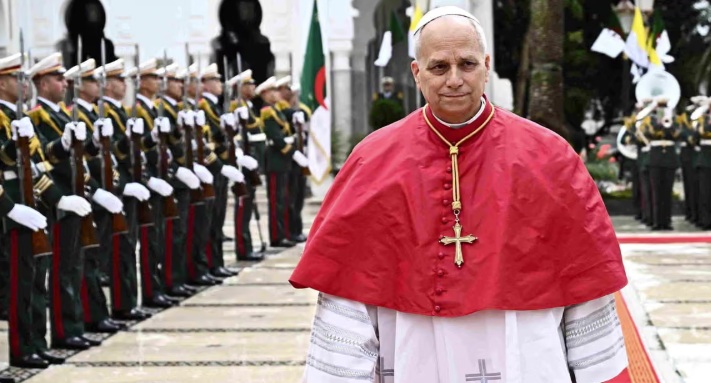
Trump Accuses The Pope of Being “Terrible For Foreign Policy”
United States ruler Donald Trump has attacked Pope Leo, the patriarch of the Catholic Church, as being “terrible for foreign policy.” The social media assault comes as Pope Leo emerged as a vocal critic of the US-Israeli military campaign against Iran.

Survey Reports Growing Skepticism, Anger Toward AI Among Younger U.S. Adults
A recent survey indicates a significant segment of young American adults harbor growing skepticism and anger toward artificial intelligence technologies. The findings, first reported by The Epoch Times, suggest a notable shift in sentiment concentrated among the youngest voting-age cohort, according to the data [1].

Vance Fails In Iran: No Peace Deal
After twenty-one hours of “peace talks” with Iran, Vice President JD Vance is coming back to the United States as a failure. The ruler was unable to secure a peace deal after lengthy talks.
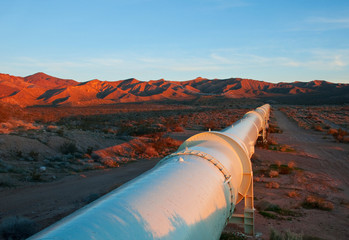
Saudi Pipeline Attack Removes 700,000 Barrels Daily from Oil Exports
The Saudi energy ministry confirmed on Thursday that Iranian strikes on the kingdom’s East-West pipeline have reduced its export capacity by approximately 700,000 barrels per day (bpd). The ministry stated the attacks hit a pumping station on the vital pipeline, which serves as the main route for supplying global markets at this time. [1]

The Theft of Your Good Deflation
Your dollar has lost 96-97 percent of its purchasing power since 1913. This is not bad luck or mysterious market forces. It is the result of deliberate policy choices that steadily, quietly drained your wealth—and convinced you it was being done for your benefit.

Trump: Iran Is “Doing a Very Poor Job” At Reopening the Strait of Hormuz
The ceasefire has so far had minimal impact on the movement of hundreds of vessels that have been stuck in the region since the start of the war in late February. United States President Donald Trump even said that “Iran is doing a very poor job” at reopening the vital waterway.

Turns Out the Elites Like the Administrative State Better than Democracy
If there is a mantra among progressive American political and media elites, it would be “our democracy,” usually preceded by what they believe to be a threat from the Right. For example, progressives deemed the recent reversal of Roe “a threat to our democracy” because it removed laws regulating abortion from Supreme Court jurisdiction and returned the issue to democratically elected legislatures.

Widespread Rationing And Global Energy Shortages Are Baked In No Matter When The War Ends Now
It is difficult to believe the pace at which global events are now moving. Apocalyptic threats are being thrown around recklessly, and severe damage is being done to the global economic system every single day.
Iran Accused Israel and The U.S. Of Violating The Ceasefire
Iran is accusing Israel of attacking Hezbollah even after the ceasefire was agreed upon. Iranian media outlets have reported that Tehran was suspending tanker traffic through the Strait of Hormuz and was considering pulling out of the deal with Washington over Israel’s actions in Lebanon.
Christian Nationalism and Trump’s Weaponization of Religion
It has been difficult to miss the Christian Nationalism movement seeping into the ruling class. Even the current president is weaponizing religion in order to attempt to promote his war-mongering ideals.

Trump Calls Greenland A “Poorly Run Piece of Ice”
United States President Donald Trump has reset his sights on Greenland, now that Washington, Iran, and Israel have agreed to a ceasefire. Trump has notoriously suggested that the U.S. take over Greenland, and recently called it a “poorly run piece of ice.”