

A Beacon of Liberty
Isolationism and the Strategic Dilemma
Strategic and selective engagement, where the US chooses battles that protect its sovereignty, economic prosperity, and geographic security without being entangled in endless ideological wars.
Gain Access – Be Informed!
sent directly to your inbox
Still not an SFP Member?
Exclusive Content • Unlimited Special Report Downloads • Join the Discussion!
100% FREE • We'll never sell or share your personal information!


Breaking News

More Health Workers Strike At Ebola Centers
As the world’s fastest Ebola outbreak spreads, more health care workers strike at facilities in the Democratic Republic of Congo. The current Ebola outbreak in eastern Congo is still spreading, and new challenges are emerging even as work begins on a study of two badly needed treatments for a type of Ebola that currently has none.

Ebola Update: Outbreak Continues To Worsen, At Least 930 Have Died
The Bundibugyo strain of the Ebola virus that is currently spreading in the Democratic Republic of Congo is continuing to spread, as health care workers struggle to contain the outbreak. At least 930 people have died, although that number is likely larger and expected to continue to increase.

America’s Gerontocracy Goes Deeper than Aging Politicians
Senator Lindsey Graham died seemingly out of the blue over the weekend after a tear in his aorta. He was 71 years old.
The news was shocking, in part because Graham was a very active senator—he was just returning from a trip to Ukraine—and because he was seemingly at the height of his power, having built one of the most influential relationships with President Donald Trump of any politician.
But another reason the news was such a surprise was because, compared to many of his colleagues in Washington, Senator Graham was on the younger side.
That impression was fueled by the ongoing ordeal of Senator Mitch McConnell. The 84-year-old serving senator was reportedly found unconscious weeks ago after a fall, leading to his ongoing hospitalization.
Early reports that EMS had responded to a cardiac arrest at McConnell’s residence when he was first hospitalized, his wife’s strange trip to China in the middle of all this, and the total radio silence for weeks from a supposedly active senator all led to speculation online that McConnell was faring far worse than his staff and Republican party insiders were admitting.
Others went as far as to speculate that McConnell had already passed away, but that his team and establishment allies were attempting to delay the public acknowledgment of his death until after it would no longer force a special election. That theory gained enough traction online to prompt McConnell’s team to post a literal proof-of-life photo of the senator holding that day’s newspaper.
This all follows, of course, the age-record-breaking presidency of Joe Biden, and the campaign that was derailed because of it. Now, Trump is on track to break Biden’s record and, at the end of his term, become the oldest serving US president in history.
In addition to McConnell, many of the most prominent members of Congress are quite elderly, have been in office for decades, and show no interest in ever retiring. Senator Dianne Feinstein—who died of old age in 2023 at the age of 90, hours after casting a vote on the Senate floor—provides a good example of how many of these career politicians apparently plan to leave office.
With all this happening, it’s easy to understand why many have increasingly come to consider the United States to be a gerontocracy, or a society ruled by old people.
As with just about anything online, there are sophisticated and unsophisticated versions of this observation.
The unsophisticated version simply points to the multitude of examples of politicians remaining in office long after most people would have retired from just about any line of work and concludes that the prevalence of exceptionally elderly politicians is hampering the government’s ability to function properly.
This narrative is based on a fundamental misunderstanding of the actual role of politicians within the American political system.
While American politicians certainly have power, in the last century or so—and especially in the decades since WWII—the bulk of federal power has shifted from politicians in Congress and state legislatures to the bureaucracies that make up the ballooning federal agencies in the executive branch.
The vast majority of those in Congress are simply expected to show up and vote with their party’s leadership on the latest massive omnibus spending bills, made up almost entirely of carve-outs to special interests. Or to pass legislation crafted with diligent collaboration from “experts” at the executive agencies that will receive the new funding.
The most effective politicians will lobby to add additional spending that in some way benefits some special interest in their own district. But mostly, their modern role is to fundraise for their party, engage in legitimizing rituals, and stoke vicious debates with the other party over what are, in the scheme of things, incredibly minor policy issues to keep us all believing that we truly live in a functioning representational democracy. And, especially because the politicians themselves are merely the frontmen for a larger staff handling the specifics on all those fronts, it’s a role that quite elderly people are certainly capable of doing well into the physical and mental decline that often accompanies one’s later years.
The more sophisticated version of the “America is a gerontocracy” narrative focuses less on the politicians themselves and more on what the government is doing. Because, if one takes even a passing glance at how the federal government taxes and spends, it quickly becomes clear that government programs are actively transferring vast amounts of wealth from younger generations to older generations who are, on average, much wealthier.
There are a lot of reasons for this. Many can be traced back to seemingly innocuous attempts to ensure that elderly people without close family members, adequate housing, or connections to any kind of community were cared for. The programs that would eventually become Social Security and Medicare were sold as small programs to help those on the margin. The same goes for the founding of interest groups and lobbies such as AARP (formerly the American Association of Retired Persons).
But as with just about any government program started in the name of helping a small number of genuinely downtrodden Americans, these entitlement programs exploded in size as they were quickly expanded to also benefit whichever groups were organized and motivated enough to lobby effectively.
And even setting lobbying aside, the elderly tend to be disproportionately dependable, and therefore powerful, as a voting bloc. Retirees especially often have more time to focus on issues, call lawmakers, watch cable news, write letters to the editor, engage with local parties and candidates, and vote than their younger working counterparts.
So promising to protect—or better yet, expand—entitlement programs that seniors benefit from is a straightforward way for any politician to secure the support of a lot of enthusiastic voters, while even muttering a half-formed thought about potentially cutting them is almost certain to torpedo any campaign.
Meaning the conditions for the substantial growth of programs transferring money to seniors were already there. But, on top of that, the baby boomer generation—now making up most retirees—has grown old at the same time that medical technology advanced substantially. So, on top of being an unusually large generation, they are also living longer. That’s, of course, a positive development. But in our increasingly socialized elder-care system that also puts a growing financial burden on younger generations.
Contrary to what the government’s shockingly-effective propaganda says, the money seniors receive through Social Security is not their own money that had been taken from their previous paychecks and set aside to be returned to them in retirement. The money they “paid in” to the program had already been used for Social Security checks for earlier generations and other government programs. The money today’s seniors are getting through the program is being taxed directly from today’s younger workers—workers who are forced to pay for a much larger pool of Social Security recipients than the previous generations were.
Add to that the other programs like Medicare that don’t even pretend to come from a “lockbox.” Or the fact that some of these programs cover things like golf fees and ski trips. Or the various government programs explicitly helping seniors stay in full family-sized homes long after downsizing would make more financial sense while simultaneously pushing the price of those homes higher and higher. And the disproportionate burden younger generations experience from the Fed’s permanent price inflation—especially the price inflation that came as a result of the trillions of dollars printed to prop things up as the federal government shut down the economy, the schools, and every aspect of life for younger generations to keep the elderly safe from a disease everyone was always going to get anyway. And, above all, the fact that much of this wealth is being transferred into the pockets of older Americans who are much wealthier than the younger people that are forced to pay for it.
Lay all that out, and it’s easy to see why we are experiencing so much generational strife right now. How could there not be?
The justified frustration younger generations are experiencing with the current setup often gets directed towards the handful of exceptionally old politicians and justices at the top of all three branches of the government. But the true root of this problem lies in the intergenerational wealth-transferring government programs that have been built up over many decades. And that will, if not properly understood and subsequently abolished, continue to fuel this generational conflict long after the current group of geriatric politicians is gone.

More Health Workers Strike At Ebola Centers
As the world’s fastest Ebola outbreak spreads, more health care workers strike at facilities in the Democratic Republic of Congo. The current Ebola outbreak in eastern Congo is still spreading, and new challenges are emerging even as work begins on a study of two badly needed treatments for a type of Ebola that currently has none.
Ebola Update: Outbreak Continues To Worsen, At Least 930 Have Died
The Bundibugyo strain of the Ebola virus that is currently spreading in the Democratic Republic of Congo is continuing to spread, as health care workers struggle to contain the outbreak. At least 930 people have died, although that number is likely larger and expected to continue to increase.

When AI Agents Trade with AI Agents, Price Discovery Dies
Autonomous AI agents are becoming active economic participants on both sides of market transactions. Enterprise platforms now embed what vendors call “touchless operations,” with agents executing procurement decisions without human review. Blockchain networks let AI agents hold wallets, settle payments, and rebalance portfolios autonomously.

Trump Lashes Out At NATO Saying It’s “Useless”
United States President Donald Trump is lashing out at NATO (North Atlantic Treaty Organization) for being “useless” to him during the war with Iran. Trump said he doesn’t need NATO’s assistance in the Strait of Hormuz, and added that the military bloc was “useless when needed” during the war with Iran.

Trump Warns “No More Mr. Nice Guy” During Iran Talks Announcement
United States President Donald Trump has warned Iran that he won’t be a “Mr. Nice Guy” anymore. Trump announced that the US negotiating team is heading to Pakistan for the next round of Iran peace talks on Monday.

US Seizes An Iranian-Flagged Cargo Ship
The United States has seized an Iranian-flagged cargo ship. Iran has already condemned the theft as “armed maritime piracy,” and sent a warning of retaliation.

U.S. Officials Express Optimism for Deal, Warn Oil Buyers of Sanctions
The Trump administration signaled a potential diplomatic breakthrough in talks to end the ongoing war with Iran on Wednesday, while simultaneously delivering a stark warning to foreign purchasers of Iranian oil. Officials from both the White House and the Treasury Department framed the dual approach as a combination of optimistic negotiation and continued economic pressure. The development comes as a U.S. naval blockade of Iranian ports remains in effect, a central component of a military campaign that began in late February.

Cuba Responds To Trump’s War Mongering: We Are “Not Afraid Of War”
United States President Donald Trump threatened Cuba with war earlier this week. He said that “we may stop by Cuba after we’re finished with this,” referring to the ongoing US-Israeli war on Iran.
“Three-Page Plan To End The War”: Oil Tumbles As US “Mulls” $20BN Cash-For-Nukes Deal
According to two U.S. officials and two additional sources briefed on the talks, Axios’ Barak Ravid reports that the US and Iran are negotiating over a three-page plan to end the war.

The American Empire Will End in Poverty and Despair
I look at the world in 2026, and I no longer see a beacon of liberty, but a dying empire stumbling toward its own ruin. This is not a sentiment born of pessimism, but of cold observation. The American project, hijacked by a nexus of central banking, perpetual war, and crony capitalism, has embarked on a suicide mission.
Trump: Israel And Lebanon Agree To A 10-Day Ceasefire
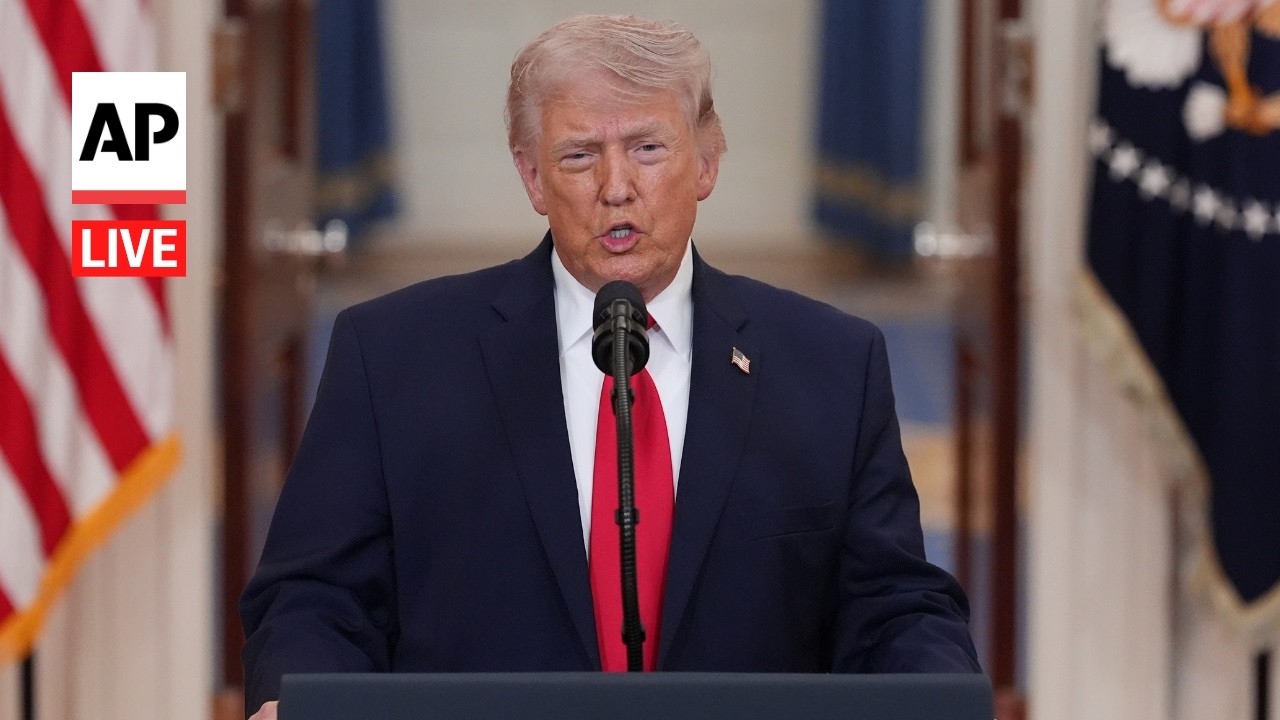
United States President Donald Trump made an announcement on Truth Social that a 10-day ceasefire between Israel and Lebanon had been agreed upon following talks in Washington.
Hegseth: Hormuz Blockade Stays “As Long As It Takes” – Ships Now Fair Game For Search & Seizure
US Navy: vessels seeking entry into Hormuz Strait now fair game for boarding, search, and outright seizure – including for suspicion of ‘contraband’.
Experts Warn of Widespread Job Losses and Global Power Struggles Amid AI Advancements
Artificial intelligence is no longer a distant concept – it is rapidly becoming one of the most powerful and disruptive forces shaping the future of humanity, according to a recent report. Tech billionaire Elon Musk has issued a stark warning, describing AI as “a supersonic tsunami headed toward humanity.” [1]

U.S. Is Ready For A “Financial Bombing” Of Iran
The United States said that it may be preparing for a “financial bombing” of Iran. This will entail applying secondary sanctions on financial institutions that do business with Tehran.

Arkansas Reported Largest Bird Flu Outbreak Of The Year
In a diagnosis, which was confirmed on April 10th, Arkansas reported its largest bird flu outbreak of the year. As war has gripped the world, the bird flu issue has been relegated to the bottom of Google searches; however, it is still a concern for farmers and consumers.

Iran May Allow Ships Through Omani Side Of Strait of Hormuz
Just a few days after the United States’ naval blockade of the Strait of Hormuz, Iran floated the idea of allowing free passage through the waterway on the Omani side. A source in Tehran said that Tehran could consider this option if the U.S. makes some concessions.

Precious Metals Work
Over the last year, the precious metal markets have seen historic increases and then decreases in price. This, of course, is the result of the workings of supply and demand, but there have also been cries of market manipulation.

The Unpublished Risk: Scientific Censorship and Lingering Questions on mRNA Vaccines
A peer-reviewed study details a rare case of dual blood cancers in a healthy woman following mRNA COVID-19 vaccination, proposing biological mechanisms for a potential link.

Thousands of Additional U.S. Troops Sent to Middle East
As United States President Donald Trump declares the war with Iran as almost over, thousands of additional troops have been deployed to the Middle East. The Trump administration has insisted that progress has been made in talks with Iran, but has threatened to escalate the war if a deal is not reached soon.

IMF Warns Of GLOBAL RECESSION Due To War
The International Monetary Fund (IMF) has warned that a global recession is coming, thanks to the war with Iran. Any further escalation would trigger a global recession that would harm the United Kingdom far more than any other G7 country.

Trump: Iran War Is “Very Close To Being Over”
United States President Donald Trump claimed that the war between the U.S. and Iran is “very close to being over.” Peace talks are expected to resume in the aftermath of the U.S. blockade of the Strait of Hormuz.
Federal Spending Rises to Post-Covid High in Wake of DOGE Failure
The US Treasury Department last week released its monthly report on federal spending and revenue. March spending for the US federal government was up by more than $20 billion, or by nearly four percent, from March of last year. In spite of the administration’s claims last year that Trump would implement hundreds of billions in spending cuts, the US federal government is now spending at higher levels than anything seen since 2021, when COVID-related spending surged above all previous historical peacetime levels.