
The following article has been contributed by the ever insightful and always informative Daisy Luther of The Organic Prepper. Daisy is the author of several books, including her latest The Pantry Primer: A Prepper’s Guide to Whole Food on a Half-Price Budget.
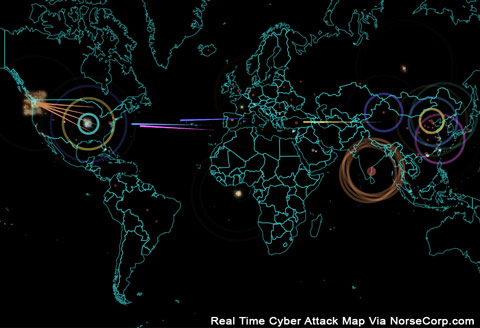
There is a lot of debate on whether Wednesday’s computer issues that shut down the New York Stock Exchange, the Wall Street Journal, and United Airlines were just a very strange coincidence (very strange) or a deliberate cyber attack
This isn’t the first possible cyber attack on the United States this year. Heck, it’s not even the first one this summer. On June 5, Reuters reported a breach occurred that comprimised the personal information of millions of federal employees, both current and former. This breach was traced back to a “foreign entity or government.”
Regardless of the origin of the so-called computer”glitches” that shut down Wall Street and a major airline, the events of Wednesday gave us just a tiny glimpse at how serious a cyber attack could be.
What exactly is a cyber attack?
A cyber attack is more than just shutting down the computer systems of a specified entity. It is defined as “deliberate exploitation of computer systems, technology-dependent enterprises and networks. Cyberattacks use malicious code to alter computer code, logic or data, resulting in disruptive consequences that can compromise data and lead to cybercrimes, such as information and identity theft.”
Technopedia lists the following consequences of a cyber attack:
- Identity theft, fraud, extortion
- Malware, pharming, phishing, spamming, spoofing, spyware, Trojans and viruses
- Stolen hardware, such as laptops or mobile devices
- Denial-of-service and distributed denial-of-service attacks
- Breach of access
- Password sniffing
- System infiltration
- Website defacement
- Private and public Web browser exploits
- Instant messaging abuse
- Intellectual property (IP) theft or unauthorized access
Cyber attacks happen far more frequently than you might think. Check out this real-time map for a look at the almost constant seige.
How does a cyber attack affect you?
You may think that if you don’t spend your day working online, that an attack on our computer infrastructure isn’t that big of a deal. You may feel like it wouldn’t affect you at all.
Unfortunately, there are very few people in the country that would remain completely unaffected in the event of a major cyber attack. Our economy, our utility grids, and our transportation systems are all heavily reliant upon computers. This makes us very vulnerable to such an attack.
And by vulnerable, I mean that if it was done on a big enough scale, it could essentially paralyze the entire country.
Here are some of the systems that are reliant on computers.
In the event of a widespread cyber attack, the following could be either completely inoperable or breached. Keep in mind that a domino effect could occur that effects systems beyond the original target.
- Gas stations (most of the pumps are now digital and connect right to your bank)
- Banks (all of the records are online) would not be able to process electronic transactions. ATM machines would not function to allow customers access to cash.
- Utility systems (most power stations are run by computers)
- Water treatment facilities (these are automated too)
- Protection of personal information, including data about your finances, medical records, physical location, and academic records – everything a person would need to steal your identity
- Government operations, including dangerous identifying information about federal employees or members of the military
- Transportation systems (trains, subways, and planes are heavily reliant upon computers)
- Traffic management systems like stoplights, crosswalks, etc.
- Air traffic control
- Everyday trade – most business have a computerized cash register that communicates directly with banks. Many business are also reliant on scanning bar codes for inventory control and pricing. Point-of-sale systems would be down and people would not be able to pay using credit or debit cards.
- Telecommunications systems can be affected if cell towers are disabled or if the landline system were directly attacked. As more people rely on VOIP, taking down internet service would serve a dual purpose.
- SMART systems could be shut down or manipulated. All of those gadgets that automate climate control, use of utilities, or appliances through SMART technology are vulnerable.
Here’s a video from NATO that explains a little bit more about the dangers of cyber attacks.
Prepping to survive a cyber attack
Prepping for a cyber attack is not that different from prepping for other types of disasters that affect the grid. You want to be able to operate independently of public utilities, stores, or public transportation.
Click each item to learn more details.
- Have a supply of water stored in case municipal supplies are tainted or shut down
- Be prepared for an extended power outage.
- Have a food supply on hand, as well as a way to prepare your food without the grid.
- Keep cash in small denominations on hand in the event that credit cars, debit cards, and ATMs are inoperable.
- Keep vehicles above half way full of fuel, and store extra gasoline.
- Be prepared for off-grid sanitation needs.
- Invest in some communications devices like ham radio or one of these other options.
- Be ready to hunker down at home to avoid the chaos that could come in the aftermath of a massive cyber attack. Be prepared to defend your home if necessary.
- Remember that your prepper supplies and skills will see you through this disaster
just like any other. - Protect your identity with a service like LifeLock (which will alert you to suspicious activity once things return to normal). Use some of these tips to keep your information locked down.


What do you think?
So, let’s hear from the “hive mind” of the preparedness community. How likely do you think it is that we’ll be hit by a massive cyber attack? Was the event on Wednesday just a coincidence or some kind of test run? What other effects do you think a massive cyber attack might have? Do you have any additional preparedness tips for such an event? Share your thoughts in the comments section below.

Please feel free to share any information from this article in part or in full, giving credit to the author and including a link to The Organic Prepper and the following bio.
Daisy Luther is the author of The Pantry Primer: A Prepper’s Guide To Whole Food on a Half Price Budget. Her website, The Organic Prepper, offers information on healthy prepping, including premium nutritional choices, general wellness and non-tech solutions. You can follow Daisy on Facebook and Twitter, and you can email her at da***@***************er.ca
Also From Daisy Luther:
San Andreas for Preppers: 12 Essential Survival Lessons from the Movie
12 Bad Strategies That Will Get Preppers Killed
Lock and Load: Are You Prepared for Civil Unrest?
You’ve Been Warned: Why You Need to Be Ready for Total Grid Failure







0 Comments