
This report was originally published by Daisy Luther at The Organic Prepper
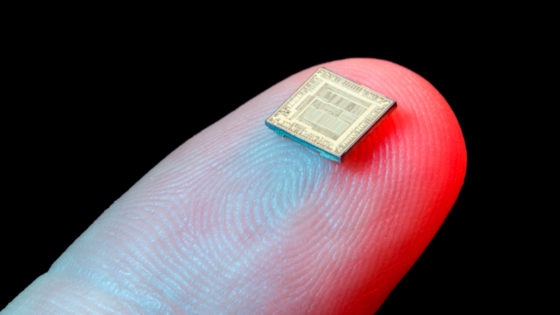
After a company in Wisconsin fitted each of their employees a microchip and claimed they absolutely loved it, many people were adamant that nope, no way, they’d never get chipped like a dog. Some people claimed religious objections (mark of the Beast) while others feel that their privacy has been already been invaded quite enough with the advent of “smart” technology and advertising cookies on the internet.
If you swear to the skies that you’ll never get chipped, several experts quoted in an article on USA Today are here to tell you that you’re wrong.
Associate professor of sociology at the University of Wisconsin-Milwaukee Noelle Chesley said, “It will happen to everybody. But not this year… Maybe not my generation, but certainly that of my kids.”
Professor Chesley isn’t alone in her prediction. Gene Munster of Loup Ventures had a lot to say about the possibility of everyone getting a microchip. He believes it’s about 50 years away.
“In 10 years, Facebook, Google, Apple, and Tesla will not have their employees chipped,” he says. “You’ll see some extreme forward-looking tech people adopting it, but not large companies.”
The idea of being chipped has too “much negative connotation” today, but by 2067 “we will have been desensitized by the social stigma,” Munster says. (source)
The article gushes about the “benefits” of getting a microchip embedded in your hand.
This would go beyond paying with your smartphone. Instead, chipped customers would simply wave their hands in lieu of Apple Pay and other mobile-payment systems.
The benefits don’t stop there. In the future, consumers could zip through airport scanners sans passport or drivers license; open doors; start cars; and operate home automation systems. All of it, if the technology pans out, with the simple wave of a hand. (source)
Seriously, how much lazier are humans going to get?
They’re right about the desensitization, though. There are things going on these days that never in a million years would have been okay decades ago, and that’s because popular culture, television, and the internet make it seem A-OK and perfectly normal. When They Who Rule decide that microchipping is the best way to ensure their total control, you can bet that there will be tv shows and movies and celebrities that all demonstrate the ease and joy of having a microchip.
Everyone’s talking about the “benefits” of getting a microchip.
Tech companies are practically waxing poetic about the joys of having a microchip implanted in one’s body.
In Sweden, BioHax says nearly 3,000 customers have had its chip embedded to do many things, including ride the national rail system without having to show the conductor a ticket.
In the U.S., Dangerous Things, a Seattle-based firm, says it has sold “tens of thousands” of chips to consumers via its website. The chip and installation cost about $200.
After years of being a subculture, “the time is now” for chips to be more commonly used, says Amal Graafstra, founder of Dangerous Things. “We’re going to start to see chip implants get the same realm of acceptance as piercings and tattoos do now.”
In other words, they’ll be more visible, but not mainstream yet.
“It becomes part of you the way a cellphone does,” Graafstra says. “You can never forget it, and you can’t lose it. And you have the capability to communicate with machines in a way you couldn’t before.”
That guy who wants to communicate with machines clearly hasn’t been watching the same sci-fi movies that I have. Nor has he read Stephen Quayle’s terrifying book, Terminated.
Graafstra isn’t the only one who thinks the whole thing is fabulous. One guy even has parties were people can “bond” over getting microchipped.
At a recent tech conference, Hannes Sjöblad explained how a microchip implanted in his hand makes his life easier. It replaces all the keys and cards that used to clutter his pockets.
“I use this many times a day, for example, I use it to unlock my smart phone, to open the door to my office,” Sjöblad said.
Sjöblad calls himself a biohacker. He explained, “We biohackers, we think the human body is a good start but there is certainly room for improvement.”
The first step in that improvement is getting a microchip about size of a grain of rice slipped under the skin. Suddenly, the touch of a hand is enough to tell the office printer this is an authorized user.
The microchips are radio frequency identification tags. The same technology widely used in things like key cards. The chips have been implanted in animals for years to help identify lost pets and now the technology is moving to humans…
…Sjöblad said he even organizes implant parties where people bond over getting chipped together. (source)
Will microchipping parties be the next generation of those outrageously expensive candle parties? Will folks be pimping microchips like they do those scented wax melts? Will it become some kind of MLM thing to make it even more socially acceptable?
What about the dark side of being microchipped?
Of course, they didn’t mention how easy it would be to shut off the microchipped person’s access to all of those things. And it isn’t like you could just not use your chip if it’s embedded in your body. If you were ever in a situation in which you didn’t wish to be identified, tough luck. Everything would be right there in a little device implanted under your skin.
Although the current breed of microchips does not have GPS tracking capability, analysts contend that they will one of these days in the not-so-distant future. Anyway, how do you KNOW that there is no GPS tracking technology in that teeny little chip? Just because they tell you so? And gee, who doesn’t want their every move being tracked?
Not every professor or tech expert thinks getting a microchip is a good idea. Mercifully, there are a few voices of reason.
Alessandro Acquisti, a professor of information technology and public policy at Carnegie Mellon University’s Heinz College, warns that this might not be a good idea. (Although it doesn’t take a Ph.D. to realize this.)
“Companies often claim that these chips are secure and encrypted…But “encrypted” is “a pretty vague term,” he said, “which could include anything from a truly secure product to something that is easily hackable.”
Another potential problem, Dr. Acquisti said, is that technology designed for one purpose may later be used for another. A microchip implanted today to allow for easy building access and payments could, in theory, be used later in more invasive ways: to track the length of employees’ bathroom or lunch breaks, for instance, without their consent or even their knowledge.
“Once they are implanted, it’s very hard to predict or stop a future widening of their usage,” Dr. Acquisti said. (source)
“This is serious stuff. We’re talking about a nonstop potential connection to my body and I can’t turn it off, I can’t put it away, it’s in me. That’s a big problem,” said Ian Sherr, an executive editor at CNET.
“It’s very easy to hack a chip implant, so my advice is don’t put your life secrets on an implant, Sjöblad said…
“It’s about educating the people and giving every person the tools…not only how to use the technology but, more importantly, when it’s being used against you,” Sjöblad warned. (source)
Yeah. Microchips are fabulous.
Here’s how it could go down.
Some people actually want to be microchipped like a dog. They’re lining up for it. It if isn’t available to them, they’re totally bummed out.
Certain folks won’t be happy until everyone has a computer chip implanted in them. Here’s how this could go.
- Initially, it would be the sheep who blindly desire to be chipped for their own “convenience” leading the way.
- Then, it would become remarkably inconvenient not to be chipped – sort of like it’s nearly impossible to not have a bank account these days.
- Then, the last holdouts could be forcibly chipped by law.
The push may be soft at first. It may begin with peer pressure in the workplace.
Three Square Market said the chips are voluntary, but Chesley says that if a company announces a plan to be chipped, the expectation is that you will get chipped — or risk losing out on advancement, raises and being a team player.
“That’s what we’re worried about,” says Bryan Allen, chief of staff for state Rep. Tina Davis (D), who is introducing a bill in Pennsylvania to outlaw mandatory chip embedding. “If the tech is out there, what’s to stop an employer from saying either you do this, or you can’t work here anymore.”
Several states have passed similar laws, while one state recently saw a similar bill die in committee. “I see this as a worker’s rights issue,” says Nevada state Sen. Becky Harris (R), who isn’t giving up. “This is the wrong place to be moving,” she says.
Should future corporations dive in to chipping their employees, they will have huge issues of “trust” to contend with, says Kent Grayson, a professor of marketing at the Kellogg School of Management at Northwestern University.
“You’ve got to have a lot of trust to put one of those in your body,” Grayson says. Workers will need assurances the chip is healthy, can’t be hacked, and its information is private, he says. (source)
So what if it meant you’d lose your job if you refused to be chipped? What if you had a family to take care of and health insurance you couldn’t afford to lose? The question of would you or wouldn’t you just got a whole lot more variables.
This horror movie gets even scarier. There is already a law on the books that could allow human beings to be forcibly chipped.
Oh, it’s couched in warm, fuzzy language and they say it’s just to help keep track of folks with Alzheimer’s or other developmental disabilities, but remember that the most unpatriotic law ever passed was also called the Patriot Act.
H.R.4919 was passed in 2016.
It directs the Department of Justice’s (DOJ’s) Bureau of Justice Assistance (BJA) to award competitive grants to health care, law enforcement, or public safety agencies, and nonprofit organizations, to develop or operate locally based proactive programs to prevent wandering and locate missing individuals with dementia or children with developmental disabilities. The BJA must give preference to law enforcement or public safety agencies partnering with nonprofit organizations that use person-centered plans and are directly linked to individuals, and families of individuals, with dementia or developmental disabilities. (source)
Despite the fact that the bill requires everyone to use privacy “best practices,” it’s not that much of a stretch to see what a slippery slope this is. Who gets to decide whether a person “needs” to be chipped for their own good? Law enforcement? Scary.
Could this lead to a cashless society?
If “everyone” is getting microchipped like these experts predict, that could be the next step in the push toward a cashless society. Think about the lack of privacy then. If everything is purchased via a chip unique to you, then no purchases could be under the radar. Whether a person was stocking up on food, watching X-rated movies, reading books on revolution, or buying ammo, it would all be recorded in a database. Our purchases could be used in some kind of pre-crime technology, ala Minority Report, or they could be used to profile us in other ways.
If there is no way to make purchases but with a chip, many people will have to reluctantly comply. The same chips could be a requirement for medical care, driver’s licenses, jobs – you name it. No matter where you tried to hide, your GPS locator would mean that you would be found. It would be like everyone being forced to have one of those ankle bracelets that criminals wear, except it would be inside your body.
If you think the atmosphere of control is unnerving now, just wait. When everyone is microchipped, the net will be even tighter.
Between the looming robot apocalypse and forcible microchipping, it seems like we won’t have to wait for “climate change” or a war of Mutually Assured Destruction to get us. Technology just might be the end of humanity.

Please feel free to share any information from this article in part or in full, giving credit to the author and including a link to The Organic Prepper and the following bio.
Daisy is a coffee-swigging, gun-toting, homeschooling blogger who writes about current events, preparedness, frugality, and the pursuit of liberty on her websites, The Organic Prepper and DaisyLuther.com She is the author of 4 books and the co-founder of Preppers University, where she teaches intensive preparedness courses in a live online classroom setting. You can follow her on Facebook, Pinterest, and Twitter,.






0 Comments