
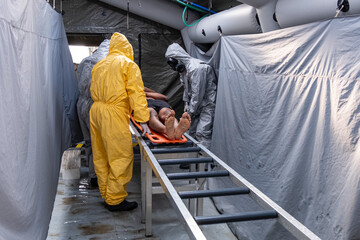
Ebola cases have now topped 500, and more than 90 deaths due to the virus have been reported, according to the latest figures released by the National Institute of Public Health. This outbreak has proven difficult for health officials to track and contain.
On Sunday, the authorities recorded 515 confirmed infections and 91 deaths across the provinces of Ituri, North Kivu, and South Kivu, bringing the overall case fatality rate to 17.7%. More than half of all patients remain under isolation or hospital care, while only 12 people have officially recovered.
“People Are Hiding” During Ebola Outbreak, Making Containment Difficult
According to a report by RT, there are several compounding factors making this particular outbreak problematic for the Democratic Republic of Congo (DR Congo). The outbreak is being fueled by a combination of insecurity, population displacement, and cross-border movement, the authorities stated.
The DR Congo declared the epidemic on May 15th, marking the country’s 17th recorded Ebola outbreak since the virus was first identified there in 1976. Later, the World Health Organization (WHO) classified the Bundibugyo strain detected in the country and neighboring Uganda as a public health emergency of international concern. There is currently no approved vaccine.
On Friday, the Africa Centers for Disease Control and Prevention (Africa CDC) said a testing backlog of more than 1,100 suspected cases was reduced to 116 by June 3, while confirmed infections rose to 397 as samples were processed. –RT
Sixteen cases have been confirmed in neighboring Uganda, after the country closed its borders to DR Congo during a rise in suspected cases.
Uganda Closes Borders To DRC As Suspected Ebola Cases Are Now Over 1000
While efforts are being made to contain this outbreak, it appears that they are all in vain. The virus is continuing to spread rapidly, while response teams have to take extra precautions to prevent being infected themselves.
WHO Director-General Tedros Adhanom Ghebreyesus said on Friday that a $518 million plan has been put in place. It is a joint response plan to be executed by the WHO and the Africa CDC.
“This plan is designed for the period from June to November of this year,” Tedros said.
The joint project “gives the continent a clear path to act with speed and unity to save lives, support the affected countries, and protect neighboring communities,” Africa CDC Director-General Jean Kaseya said.







0 Comments