

A Beacon of Liberty
Isolationism and the Strategic Dilemma
Strategic and selective engagement, where the US chooses battles that protect its sovereignty, economic prosperity, and geographic security without being entangled in endless ideological wars.
Gain Access – Be Informed!
sent directly to your inbox
Still not an SFP Member?
Exclusive Content • Unlimited Special Report Downloads • Join the Discussion!
100% FREE • We’ll never sell or share your personal information!


Breaking News

Europe’s 10,000 Excess Deaths Have Been Attributed to Heatwave
Europe recorded 10,000 excessive deaths just last month, and authorities are blaming it on the heatwave. Temperatures in Spain, Germany, and France soared over 104 degress Fahrenheit, or 40 degress Celsius.

More Health Workers Strike At Ebola Centers
As the world’s fastest Ebola outbreak spreads, more health care workers strike at facilities in the Democratic Republic of Congo. The current Ebola outbreak in eastern Congo is still spreading, and new challenges are emerging even as work begins on a study of two badly needed treatments for a type of Ebola that currently has none.

The Battle For The Strait Of Hormuz: Can The World Survive Without Oil From The Persian Gulf?
Now, we are going to see what really happens to the global economy when the Strait of Hormuz is completely closed for an extended period of time. Before the war, approximately 45 percent of all Asian oil imports traveled through the Strait of Hormuz.

Europe’s 10,000 Excess Deaths Have Been Attributed to Heatwave
Europe recorded 10,000 excessive deaths just last month, and authorities are blaming it on the heatwave. Temperatures in Spain, Germany, and France soared over 104 degress Fahrenheit, or 40 degress Celsius.
More Health Workers Strike At Ebola Centers
As the world’s fastest Ebola outbreak spreads, more health care workers strike at facilities in the Democratic Republic of Congo. The current Ebola outbreak in eastern Congo is still spreading, and new challenges are emerging even as work begins on a study of two badly needed treatments for a type of Ebola that currently has none.
The Battle For The Strait Of Hormuz: Can The World Survive Without Oil From The Persian Gulf?
Now, we are going to see what really happens to the global economy when the Strait of Hormuz is completely closed for an extended period of time. Before the war, approximately 45 percent of all Asian oil imports traveled through the Strait of Hormuz.

Americans No Longer Believe In America
Morale in the United States was lower during the 250th anniversary of the Declaration of Independence from Great Britain. Unfortunately, many Americans were not feeling very festive or positive about the US.

Iran Accuses The US Of Acting Like “Pirates”
In a statement on Tuesday, the Iranian Revolutionary Guard Corps (IRGC) accused Washington of acting like “pirates” by restricting energy flows in the region. The IRGC further warned that regional oil and gas exports could be blocked completely in response to the…

Downstream Risks From Trump’s War With Iran
The mainstream media obsesses over oil prices. Every time a barrel jumps a few dollars, the pundits wring their hands. But they are missing the real story — the one that will crash civilization long before a gas pump runs dry. What I see, from my years tracking global supply chains, is a nightmare hidden beneath the headlines: the war with Iran is severing the arteries that carry downstream commodities — aluminum, fertilizer, diesel, plastics, helium — the very things that make modern life possible.

America’s Gerontocracy Goes Deeper than Aging Politicians
Senator Lindsey Graham died seemingly out of the blue over the weekend after a tear in his aorta. He was 71 years old.
The news was shocking, in part because Graham was a very active senator—he was just returning from a trip to Ukraine—and because he was seemingly at the height of his power, having built one of the most influential relationships with President Donald Trump of any politician.
But another reason the news was such a surprise was because, compared to many of his colleagues in Washington, Senator Graham was on the younger side.
That impression was fueled by the ongoing ordeal of Senator Mitch McConnell. The 84-year-old serving senator was reportedly found unconscious weeks ago after a fall, leading to his ongoing hospitalization.
Early reports that EMS had responded to a cardiac arrest at McConnell’s residence when he was first hospitalized, his wife’s strange trip to China in the middle of all this, and the total radio silence for weeks from a supposedly active senator all led to speculation online that McConnell was faring far worse than his staff and Republican party insiders were admitting.
Others went as far as to speculate that McConnell had already passed away, but that his team and establishment allies were attempting to delay the public acknowledgment of his death until after it would no longer force a special election. That theory gained enough traction online to prompt McConnell’s team to post a literal proof-of-life photo of the senator holding that day’s newspaper.
This all follows, of course, the age-record-breaking presidency of Joe Biden, and the campaign that was derailed because of it. Now, Trump is on track to break Biden’s record and, at the end of his term, become the oldest serving US president in history.
In addition to McConnell, many of the most prominent members of Congress are quite elderly, have been in office for decades, and show no interest in ever retiring. Senator Dianne Feinstein—who died of old age in 2023 at the age of 90, hours after casting a vote on the Senate floor—provides a good example of how many of these career politicians apparently plan to leave office.
With all this happening, it’s easy to understand why many have increasingly come to consider the United States to be a gerontocracy, or a society ruled by old people.
As with just about anything online, there are sophisticated and unsophisticated versions of this observation.
The unsophisticated version simply points to the multitude of examples of politicians remaining in office long after most people would have retired from just about any line of work and concludes that the prevalence of exceptionally elderly politicians is hampering the government’s ability to function properly.
This narrative is based on a fundamental misunderstanding of the actual role of politicians within the American political system.
While American politicians certainly have power, in the last century or so—and especially in the decades since WWII—the bulk of federal power has shifted from politicians in Congress and state legislatures to the bureaucracies that make up the ballooning federal agencies in the executive branch.
The vast majority of those in Congress are simply expected to show up and vote with their party’s leadership on the latest massive omnibus spending bills, made up almost entirely of carve-outs to special interests. Or to pass legislation crafted with diligent collaboration from “experts” at the executive agencies that will receive the new funding.
The most effective politicians will lobby to add additional spending that in some way benefits some special interest in their own district. But mostly, their modern role is to fundraise for their party, engage in legitimizing rituals, and stoke vicious debates with the other party over what are, in the scheme of things, incredibly minor policy issues to keep us all believing that we truly live in a functioning representational democracy. And, especially because the politicians themselves are merely the frontmen for a larger staff handling the specifics on all those fronts, it’s a role that quite elderly people are certainly capable of doing well into the physical and mental decline that often accompanies one’s later years.
The more sophisticated version of the “America is a gerontocracy” narrative focuses less on the politicians themselves and more on what the government is doing. Because, if one takes even a passing glance at how the federal government taxes and spends, it quickly becomes clear that government programs are actively transferring vast amounts of wealth from younger generations to older generations who are, on average, much wealthier.
There are a lot of reasons for this. Many can be traced back to seemingly innocuous attempts to ensure that elderly people without close family members, adequate housing, or connections to any kind of community were cared for. The programs that would eventually become Social Security and Medicare were sold as small programs to help those on the margin. The same goes for the founding of interest groups and lobbies such as AARP (formerly the American Association of Retired Persons).
But as with just about any government program started in the name of helping a small number of genuinely downtrodden Americans, these entitlement programs exploded in size as they were quickly expanded to also benefit whichever groups were organized and motivated enough to lobby effectively.
And even setting lobbying aside, the elderly tend to be disproportionately dependable, and therefore powerful, as a voting bloc. Retirees especially often have more time to focus on issues, call lawmakers, watch cable news, write letters to the editor, engage with local parties and candidates, and vote than their younger working counterparts.
So promising to protect—or better yet, expand—entitlement programs that seniors benefit from is a straightforward way for any politician to secure the support of a lot of enthusiastic voters, while even muttering a half-formed thought about potentially cutting them is almost certain to torpedo any campaign.
Meaning the conditions for the substantial growth of programs transferring money to seniors were already there. But, on top of that, the baby boomer generation—now making up most retirees—has grown old at the same time that medical technology advanced substantially. So, on top of being an unusually large generation, they are also living longer. That’s, of course, a positive development. But in our increasingly socialized elder-care system that also puts a growing financial burden on younger generations.
Contrary to what the government’s shockingly-effective propaganda says, the money seniors receive through Social Security is not their own money that had been taken from their previous paychecks and set aside to be returned to them in retirement. The money they “paid in” to the program had already been used for Social Security checks for earlier generations and other government programs. The money today’s seniors are getting through the program is being taxed directly from today’s younger workers—workers who are forced to pay for a much larger pool of Social Security recipients than the previous generations were.
Add to that the other programs like Medicare that don’t even pretend to come from a “lockbox.” Or the fact that some of these programs cover things like golf fees and ski trips. Or the various government programs explicitly helping seniors stay in full family-sized homes long after downsizing would make more financial sense while simultaneously pushing the price of those homes higher and higher. And the disproportionate burden younger generations experience from the Fed’s permanent price inflation—especially the price inflation that came as a result of the trillions of dollars printed to prop things up as the federal government shut down the economy, the schools, and every aspect of life for younger generations to keep the elderly safe from a disease everyone was always going to get anyway. And, above all, the fact that much of this wealth is being transferred into the pockets of older Americans who are much wealthier than the younger people that are forced to pay for it.
Lay all that out, and it’s easy to see why we are experiencing so much generational strife right now. How could there not be?
The justified frustration younger generations are experiencing with the current setup often gets directed towards the handful of exceptionally old politicians and justices at the top of all three branches of the government. But the true root of this problem lies in the intergenerational wealth-transferring government programs that have been built up over many decades. And that will, if not properly understood and subsequently abolished, continue to fuel this generational conflict long after the current group of geriatric politicians is gone.

US Bans Americans From Leaving DR Congo As Ebola Spreads
The United States ruling class has banned Americans currently in the Democratic Republic of Congo from leaving the country amid an increasingly spreading Ebola outbreak. About two dozen Americans are now stuck in DR Congo as healthcare workers struggle to contain a Bundibugyo outbreak of the Ebola virus.

Trump Tells Israel To Leave Lebanon, While Hypocritically Increasing Strikes On Iran
US ruler Donald Trump is hypocritically demanding that Israeli ruler Benjamin Netanyahu pull his military forces from Lebanon and Syria, as the US increases its strikes on Iran. “They don’t want you there. You should redeploy,” Trump reportedly told the Israeli leader.

Trump Vows To Increase Strikes on Civilian Infrastructure in Iran
United States President Donald Trump has vowed to increase strikes on civilian infrastructure in Iran. Unless Tehran gives up and bows to US demands, Trump will initiate a ground campaign, taking the war to a whole new level.

Iran Launches ‘Brazen’ Attacks On More Tankers In Hormuz, Killing Sailors, After Araghchi Mocked Trump’s Toll Plan
The battle for Hormuz has ramped up after the United States has undertaken three consecutive nights of major bombing raids against Iranian targets.

The AI Arms Race Is Outpacing Our Freedom — And Government Censorship Has Already Begun
This relentless commoditization is not just a technological curiosity; it’s a seismic shift in power. As I wrote in February 2026, “On a single afternoon in early 2026, a technological tremor erased $30 billion from IBM’s market capitalization” [1]. The catalyst wasn’t a war or a natural disaster — it was an AI model announcement. The genie is out of the bottle, and no amount of regulatory hand-wringing will stuff it back in. The sheer pace of improvement means that the capabilities we see today will look primitive next year, and the year after that, the most powerful intelligence on Earth may run on a device in your pocket.

Screwworm Confused Health Official As It Continues To Spread in the US
The deadly screwworm is continuing to spread through the United States, confusing health officials who have put plans in motion to stop it. So far, US cases of screwworm infection are hovering at 35 animals, most of which are clustered in Texas. The parasite is flesh-eating, and sterile-fly projects are in place to control the spread of the New World screwworm.

Iran Says The Strait of Hormuz “Will Never Be Reopened Through… American Acts of Hostility”
Iran has warned that during attacks by the United States on Iran and its interests, the Strait of Hormuz will never be reopened. Iranian military spokesman Brig. General Mohammad Akraminia said that Iran’s Revolutionary Guard Corps will fight for control of the vital waterway “until their last breath.”

Russia: “We Will Respond…Several Times More Powerfully” To Ukraine’s Strikes
Russian president Vladimir Putin said that he will respond to Ukraine’s recent strikes. As Ukraine continues to suffer setbacks on the battlefield, it has stepped up drone strikes on civilian targets and infrastructure, to which Putin says retaliation will be “several times” more powerful.

Don’t Blame the Billionaires, Change the Incentives
If you read enough commentary, you’ll find various versions of the idea that our ruination is the result of powerful private interests driving government decisions that benefit them at our expense. Simply put, rich guys can buy votes that favor them, and only them. In some cases, they augment their bribes with blackmail.
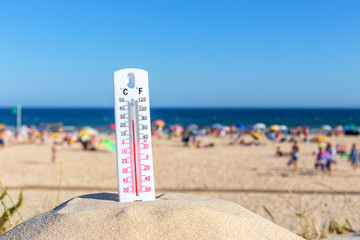
“Mega Heat Dome” Will Drive Temperatures In The U.S. As High As 117 Degrees
If you live in the western half of the United States, it is going to be really hot next week. I realize that I have been writing about extreme heat a lot lately, but I can’t help it because what we are experiencing right now is highly unusual. The “Monster El Niño” of 2026 will be causing a tremendous amount of chaos for many months to come, and agricultural production all over the globe will be greatly affected.

US Citizen Tests Positive For Ebola
A United States citizen has tested positive for Ebola during the ongoing outbreak in the Democratic Republic of Congo. The infected person has been working in the DR Congo for a humanitarian group.

Iran Is Making The US “Pay The Price” For Not Keeping Its Word
Iran has said that the United States is paying the price for its refusal to keep its word in war negotiations. Tehran’s top negotiator, Mohammad Ghalibaf, has said that Tehran will not allow the US to violate the terms of the memorandum of understanding.
Trump Describes Saturday Night Phone Call With Lindsey Graham Hours Before Senator’s Death
Officially, Lindsey Graham died of an aortic dissection due to Arteriosclerotic Cardiovascular Disease, according to preliminary findings by the DC Medical Examiner – so who knows. An aortic dissection is characterized by a tear in the aortic wall.